
Finding Stillness in Transition
A collaborative blog between Margy Brill, LCSW and Hannah Lee, LCSW
We can feel it now – heart racing, stomach churning, jaw clenching: discomfort in our body as it responds to or anticipates a change, loss, or life transition. Our emotions are swirling and chaotic; we may feel sadness, worry, nervousness, fear, excitement, relief, panic, devastation, apathy.
We feel or experience these emotions all at once, or they may pop up and disappear periodically; when we tend to one emotion another pops up, like a game of whack a mole.
As humans, it is normal to experience intense emotions and sensations around life events, transitions, and losses. In our westernized, individualized world, we often feel isolated during times of transition and are taught to expect sameness rather than embracing change. We are also quick to decide how a transition will impact us – this new job will definitely solve our problems, or our day is definitely ruined because we missed the train. We try to put a value judgment on transitions to make sense of them, but in reality, changes and outcomes are much more open-ended.
We have heard from many people in our personal and professional lives (and have experienced ourselves…many, many times!), that we are rewarded in our society when we “present well” and hide weakness or vulnerability, and that we should strive for this consistency in behavior – if we do so, that is considered “good” and “successful.”
We are here to assure you that it is normal to feel many emotions and discomfort in mind and body during times of transition, and you are not alone when you feel this way.
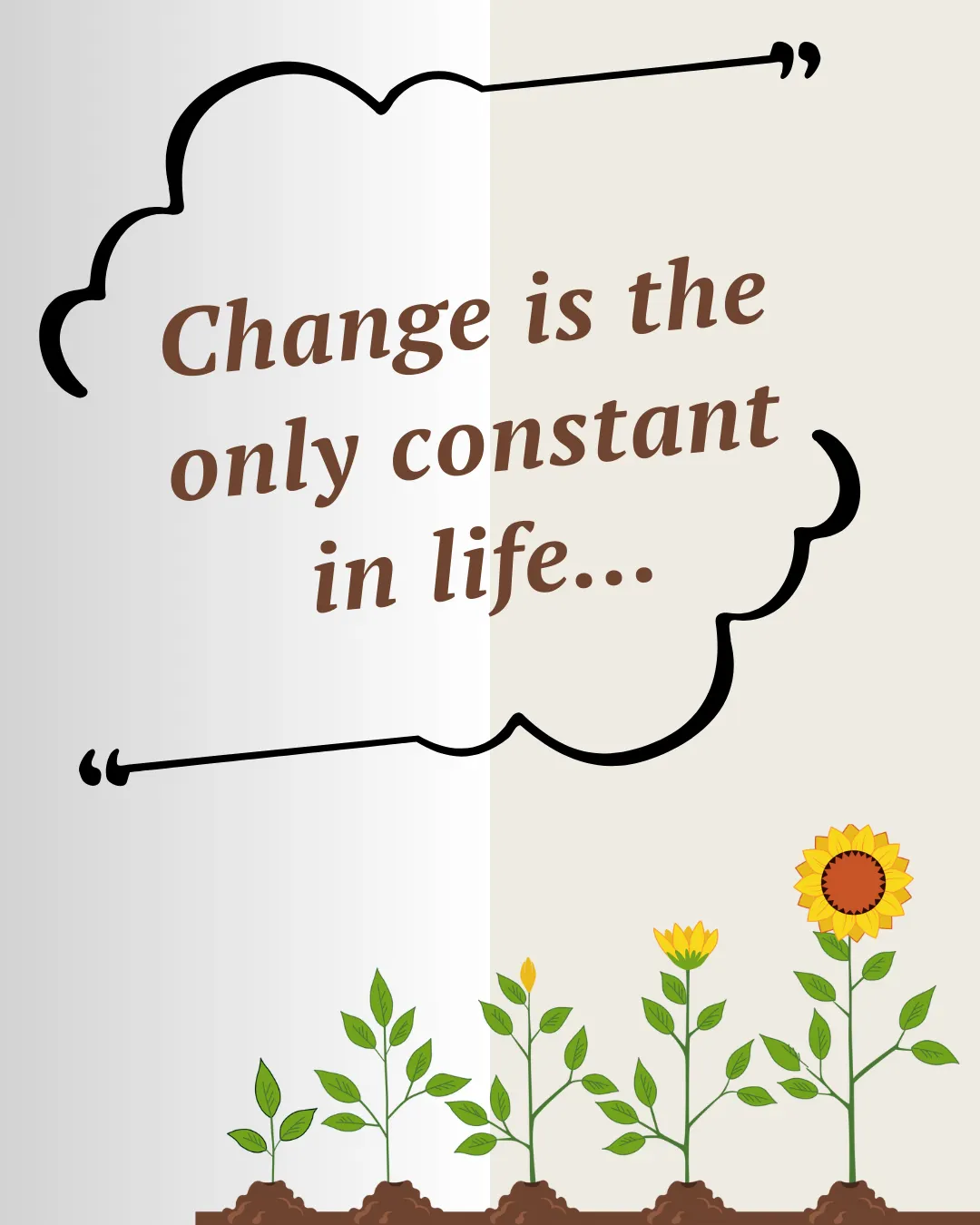
And, we are here to remind all of us that transitions are a natural part of life, a part of being human – and they are not going anywhere. If there is one thing we are guaranteed in life it is continuous change and transition, in both small and big ways. When we can learn to embrace this, allow ourselves to feel it all and find groundedness through change, we can grow and evolve in transformative ways as humans and as a community.
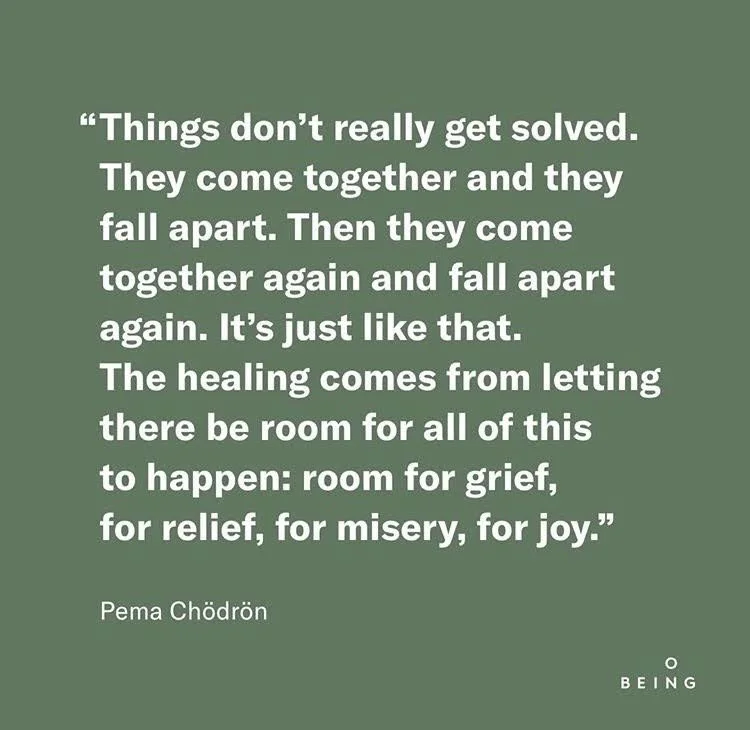
As Pema Chödrön writes, “Things are always in transition…Nothing ever sums itself up in the way that we like to dream about. The off-center, in-between state is an ideal situation, a situation in which we don’t get caught and we can open our hearts and minds beyond limit. It’s a very tender, nonaggressive, open-ended state of affairs. To stay with that shakiness—to stay with a broken heart, with a rumbling stomach, with the feeling of hopelessness and wanting to get revenge—that is the path of true awakening.” (When Things Fall Apart: Heart Advice for Difficult Times).
There is safety that comes from stability, routine, and a sense of steadiness; when that is disrupted or threatened to change, it makes sense that our body and mind react to this as a perceived threat. When we feel threatened, this can activate our nervous system to go into fight, flight, or freeze, which can cause an array of uncomfortable and unpleasant emotions, thoughts and physical sensations.
In moments of activation, there are ways we can support our body to connect back to our ventral vagal state, the part of our nervous system which makes us feel safe, connected, and calm. When we are in our ventral vagal, we often feel more grounded and settled in our body and mind, and this can support us in moving through transitions. There are many ways to connect back with our ventral vagal states, but here are a few of our favorite suggestions and resources:
Identifying “anchors” or safety cues. Anchors could include people, activities/practices, physical spaces, or memories that we can tap into, bring to our awareness, and access safety. Russ Harris has some beautiful anchoring and other mindfulness practices in his book When Life Hits Hard, and so does Deb Dana in Polyvagal Exercises for Safety and Connection.
Practicing dialectical thinking, which helps us to be more nuanced and consider multiple possibilities. For example, reframing “I’m dreading this project and it is bound to fail,” to “I feel frustrated about this project but I don’t know for sure how it will end.” This allows us to validate our discomfort while acknowledging that we don’t know the future.
Engaging your five senses can help you reconnect with your body and mind, and support healthy emotional regulation. There are lots of ways to do this, but here are a few we use:
Holding an ice cube
Eating a mint
Smelling lavender
Brief meditation/mindfulness practice (like RAIN)
Movement: walking outside, yoga, stretching
Here are some more reflective exercises focused on regulating and grounding your body and mind through anchoring the nervous system.
As we ground our bodies and normalize that we feel many emotions at once during a transition, let us give ourselves more compassion and remind ourselves that change is both hard and can be a healing place to be with new possibilities on the horizon.
“There will be times in your life when you feel as if life is burning down around you, but know that renewal is in its wake. Trust in what will open, what will grow, after something else has burned away…And trust that one of the things guaranteed to grow- time after time, fire after fire- is you. Possibilities, like seeds, are being released into the air” (Maggie Smith, Keep Moving: Notes on Loss, Creativity, and Change).
We invite you to join us for Yoga for Transitions on Sunday, March 15 from 2-3:30pm CST on Zoom. This virtual event will combine movement with moments for reflection and journaling around the following themes: identifying emotions during times of transition; normalizing that transitions are hard and emphasizing to build safety; and embracing change and duality rather than clinging to the desire for life to stay the same. Come join us in community as we normalize, embrace, and move through transitions together. Register here!