
Coping with Grief from Secondary Loss
After a loved one dies, we grieve and mourn their death. This is the primary loss: our person’s death and their physical absence in our life. As a society we often acknowledge this primary loss— we send each other bereavement or sympathy cards, especially in the time immediately following someone’s death.
However, there are many other losses that happen as a result of this death– the death is often a catalyst for an avalanche of losses. In the grief and bereavement world, we call these secondary losses- which includes all losses occurring as a result of a loved one’s death (the primary loss).
As a grief therapist, all of my clients have experienced secondary losses, and many share that these losses often do not feel witnessed or acknowledged by others.
When my friend died the summer before I graduated from college, I (obviously) didn’t receive any sympathy or bereavement cards that said: “I’m so sorry for the loss of the travel plans you had with your best friend…the loss of the dream that she would stand up with you at your wedding…your loss of identity, confidence and security in life as you’re about to graduate from college and now have no idea what to do with your future.”
I hear clients share similar experiences of secondary losses not being witnessed by others: loss of income or financial security after a partner dies, loss of stability and belonging after a parent dies, loss of support system after a sibling or friend dies, loss of “old self” and feeling like a fundamentally different human after their loved one dies.
These are just some common secondary losses I process with clients– and there are many, many more:
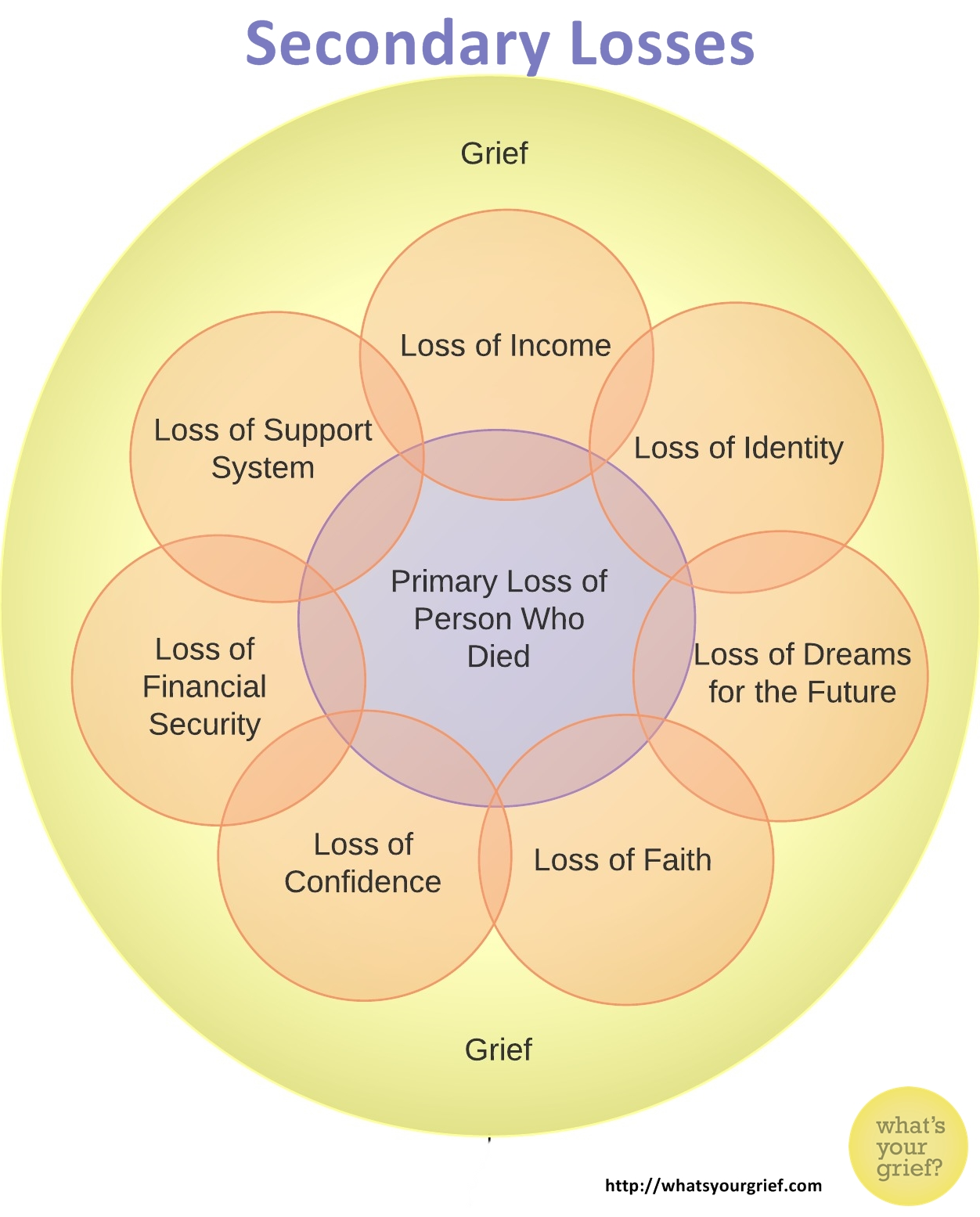
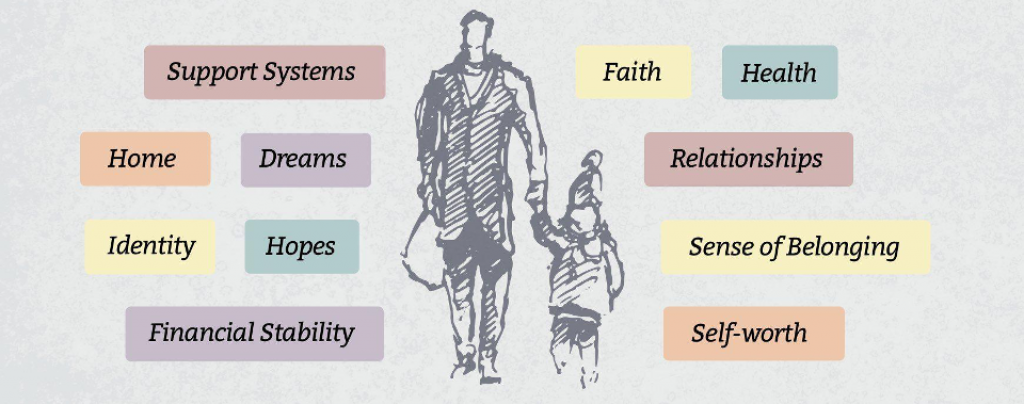
As social beings and as grievers, we need our grief to be witnessed by others; this includes grief from all our losses, from the physical presence of the person who died to our secondary losses following their death.
If your grief around secondary losses hasn’t been witnessed, please know that this grief and these losses are valid and deserve to be recognized and processed as a part of your bereavement journey.
Along with others witnessing your grief related to your secondary losses, I invite you to extend extra self-compassion to yourself; be gentle and kind to yourself as these losses are significant, can show up abruptly (or unexpectedly), and are a very common, normal part of the painful, profound experience following a death-loss.
Are you grieving and mourning the death of a loved one? If so, here are some reflection questions to consider. I invite you to individually reflect, or explore in community with others:
When the person you love died, what did you lose along with their physical presence in your life?
Choose a few of your most painful or significant secondary losses and describe them. How have these evolved or shifted over time?
Who is witnessing (or has witnessed) your secondary losses? If these losses have not been witnessed- where may you seek connection and acknowledgment from others (ex: joining a grief group, attending a death cafe, etc.)? Please reach out if you’d like support connecting with a grief community.
References + Resources:
If you are grieving the loss of someone you love, we are holding you close in our hearts and minds and are here for you at Room to Breathe. We invite you to explore our therapy and yoga/mindfulness offerings to support you in your grief journey.
Join Margy for a virtual grief processing workshop, Stitching the Wound: Caring for Ourselves in Grief, on Sunday, December 13th at 1 pm. Learn more here.
Margy also facilitates ongoing grief groups for people mourning the death of loved ones; please reach out if you’re interested in learning more: margy@roomtobreathechicago.com